Skip to content
  • Services
    • Consulting Services
    • Health and Safety Programs
    • Safety Inspections
    • Safety Training
      • Onsite Safety Training
      • Online Safety Training
      • Video On-Demand Training
    • Industrial Hygiene Services
      • Asbestos Testing
      • Indoor Air Quality Testing
      • Lead Testing
      • Radon Testing
    • Environmental Compliance Reporting
  • Resource Center
    • Regulatory Updates
    • Safety Tips
    • CCI News
    • Case Studies
    • Marketing Kit
    • Video Trainings
  • About Us
  • Contact Us
    • Careers

(610) 237-7100 info@ccicomply.com

  • LinkedIn
  • Facebook
  • Services
    • Consulting Services
    • Health and Safety Programs
    • Safety Inspections
    • Safety Training
      • Onsite Safety Training
      • Online Safety Training
      • Video On-Demand Training
    • Industrial Hygiene Services
      • Asbestos Testing
      • Indoor Air Quality Testing
      • Lead Testing
      • Radon Testing
    • Environmental Compliance Reporting
  • Resource Center
    • Regulatory Updates
    • Safety Tips
    • CCI News
    • Case Studies
    • Marketing Kit
    • Video Trainings
Logo of Compliance Consultants, INC. with tagline of Health | Safety | Environmental
  • About Us
  • Contact Us
    • Careers
OSHA’s Top 10 Safety Violations for 2025

OSHA’s Top 10 Safety Violations for 2025

Every fall, The National Safety Council (NSC) announces OSHA’s Top 10 Most Commonly Cited Violations for the prior year. This year’s updated list was published […]
Read more

How to Avoid an OSHA Imminent Danger Inspection

How to Avoid an OSHA Imminent Danger Inspection

An imminent danger inspection is OSHA’s highest priority and is conducted when conditions within a workplace present an immediate risk to employees of serious physical […]

Read more

Key Safety Tips for Construction Lighting

Key Safety Tips for Construction Lighting

The seasonal time change creates a higher risk for injuries at work. Employers and staff should be aware of the possible effects on safety caused […]

Read more

OSHA Looking to Expand Its Voluntary Protection Programs (VPP)

OSHA Looking to Expand Its Voluntary Protection Programs (VPP)

As the current administration transitions from aggressive OSHA enforcement to compliance, the U.S. Department of Labor (DOL) says OSHA is looking to expand its Voluntary […]

Read more

Experience Modification Rate (EMR): What It Is and Why It Matters

Experience Modification Rate (EMR): What It Is and Why It Matters

Compliance Consultants, Inc. works with countless clients struggling to win larger contracts because of a high Experience Modification Rate (EMR). Many of these same clients […]

Read more

Warning Line Systems in Construction – A Safety Guide

Warning Line Systems in Construction – A Safety Guide

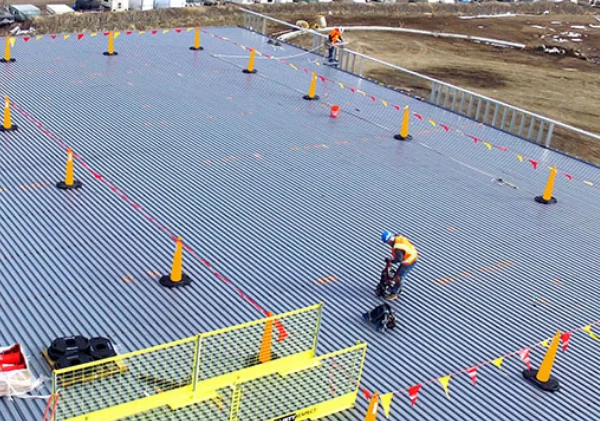
Warning line systems are an important safety measure to prevent falls. Falls continue to be one of OSHA’s Top 10 most cited violations. Warning line […]

Read more

CCI’s FREE Consultation Process – What To Expect

CCI’s FREE Consultation Process – What To Expect

Why You Need Regular Inspections and a Safety Plan A near miss or an OSHA citation can be a very stressful experience. Not only might […]

Read more

Should You Consider Outsourcing Your Safety Needs?

Should You Consider Outsourcing Your Safety Needs?

Outsourcing Safety To Manage Risks and Costs Employees are exposed to hazards every day on the job and must be kept safe. In this economy, […]

Read more

How to Develop a Safety Program From the Ground Up

How to Develop a Safety Program From the Ground Up

Workplace hazards are a reality in most industries. And although the severity of such hazards differs, the one thing every industry has in common is […]

Read more

Electrical Safety Tips: AEGCP vs. GFCI

Electrical Safety Tips: AEGCP vs. GFCI

Do You Know The Differences in Electrical Safety Options? Electrical safety is crucial on any jobsite, not only for the workers but also for materials […]

Read more

CATEGORIES

  • Regulatory Updates
  • Safety Tips
  • CCI News
  • Case Studies
  • Marketing Kit
  • Video Trainings

Recent Posts

  • Take Time Out for a Safety Stand-DownMarch 26, 2026
  • Summary: While a written safety program is a must-have for certain kinds of employers, the document is not enough. In order for a workplace to be truly safe, actionable policies must be put in place. Occupational safety consulting can help. Small business owners in the construction, manufacturing, and industrial sectors are familiar with written safety programs. They know a written program carries a certain amount of weight when it comes to insisting that their management teams maintain a safe workplace. But in far too many cases, a written safety program is nothing more than a bulky binder that lives on a shelf. At Compliance Consultants, we aim to change that. We want employers to view their written safety program as more than a mere checkbox exercise. We want them to see a robust safety program as the backbone of both operational excellence and safety. The Trap of Paper Safety Having a written safety program in place is a wise idea because it codifies your company’s policies and procedures. But there is an inherent trap. It is easy to come up with policies, print them on paper, and collate them into a beautifully organized document, only to put the manual on a shelf and forget about it. We call this ‘paper safety’. A primary principle of workplace safety consulting is not falling into this trap. It is not enough to simply have a manual with no system in place to ensure policies are understood and followed. Yet organizations content with paper safety often don’t know what their policies say – until after an incident. A truly proactive safety program combines paper documents with systematic implementation. The system also evolves with the needs of the organization. It establishes: Expectations – Every employee knows the proper way to perform each task and does so, eliminating shortcuts that could prove dangerous. Accountability – Policies define the parties responsible for inspections, equipment maintenance, training, reporting, follow-up, etc. Consistency – A safety plan that does not fluctuate based on organizational busyness is one that provides consistent safety day-in and day-out. Occupational safety is both a principle and a practice. A written safety program, reinforced by policy-driven action, creates an optimal environment in which occupational safety can thrive. It allows an organization to move from mere paper safety to genuine proactive safety. Reduce Liability, Protect the Bottom Line Reinforcing a written safety program with genuine action is especially important in the industrial and construction industries. Why? Because the combined costs of an accident tend to go above and beyond immediate medical bills. And a single preventable accident can jeopardize a company’s financial future. The actual cost of an accident usually exceeds what insurance might cover for medical bills. Moreover, indirect costs can climb to many times more than what is paid out for medical care. Indirect costs include: Fees and Fines – Attorney’s fees mount quickly when lawsuits are filed. In addition, OSHA penalties do not get any cheaper. They only increase as the government seeks to stamp out wilful violations. Higher Insurance Premiums – An organization’s Experience Modification Rate (EMR) directly affects worker’s compensation costs. Every accident resulting in a claim only pushes insurance rates higher. Productivity Losses – Accidents can translate into lost time for affected workers. A history of accidents can reduce overall morale as well. Between the two, productivity losses have become very real. A written safety program is your first line of defense against the true costs of an accident. But the actions your company takes to guarantee policies are implemented and enforced are where the rubber meets the road. You need to be able to prove that your company has done everything possible to prevent accidents. If you are content with paper safety alone, you could be in trouble. You Need Workers on Board A written safety program and verifiable action need one more thing to thrive: workers who willingly get on board. That is where coaching, training, and education prove invaluable. A good example is a work environment in which wearing personal protective equipment (PPE) is standard. If management is unwilling or unable to enforce the policy, investing in the most expensive PPE will not make the workplace safer. Workers who choose not to wear it must be addressed so that they fall in line with the organization’s occupational safety standards. To that end, we recommend coaching, training, and education to create a culture of safety. When safety is baked into a company’s culture, employees follow established safety protocols organically. They see it as just another part of the job. On the other hand, a company culture that does not emphasize safety creates an environment in which using PPE seems like a chore. What a Culture of Safety Looks Like Workplace safety consulting from Compliance Consultants can help you establish a proactive culture of safety. Here is what it looks like using a simple comparison of four key components: Mindset – A reactive culture dismisses safety is something that slows things down. A proactive culture sees safety as a means to working more efficiently. Communication – Communication in a reactive culture is based on a top-down hierarchy. Communication in a proactive culture revolves around open dialogue, especially when reporting near misses is concerned. Leadership – Leadership in a reactive culture tends to point fingers after an accident. That same leadership in a proactive culture leads by example on the shop floor and at the construction site. Outcomes – Safety issues in a reactive environment lead to high turnover and risk. In a proactive environment, the safety mindset leads to higher retention, fewer risks, and increased operational pride. Building a culture of safety does not end with publishing a written safety plan and collating it in a binder. That is where it starts, but it requires active engagement, consistent communication, and a management team that actually ‘walks the walk’. Are you looking to get beyond paper safety but don’t know where to start? A FREE safety inspection from Compliance Consultants, Inc. is the best starting place. Let us help you develop a cost-effective and customized Health & Safety Program that you can both put on paper and implement with action. Contact us today for your FREE safety inspection. FAQs Can a written safety program reduce liability? Yes. A written program provides evidence of an organization’s due diligence. It serves as a paper trail that proves an organization took reasonable care to protect workers. Why is a written safety program not enough on its own? A written program that is never implemented does nothing more than gather dust on a shelf. Policies must be implemented and enforced to be effective. Can being proactive about safety help with compliance? Absolutely. Although compliance and proactive safety measures are distinctly different, any measures taken to make an organization safer will boost compliance. Can a safety program lower my EMR? It can, but probably not overnight. EMR is based on a three-year rolling average. It could take some time for a written safety program and implementation to reduce your score considerably. How can I get resistant workers on board? We have found it extremely helpful to change the tone of the discussion from compliance to protection. When workers view safety policies as a way to protect themselves from harm, they are less likely to resist.
    Proactive Safety: Why a Written Safety Program Isn’t Just a CheckboxMarch 26, 2026
  • construction worker standing at guardrail system overlooking construction site
    Construction Safety: ‘Focus Four’ Hazards Every Site Manager Must MasterFebruary 17, 2026

Posts navigation

< Previous
Next >